
 EN
EN
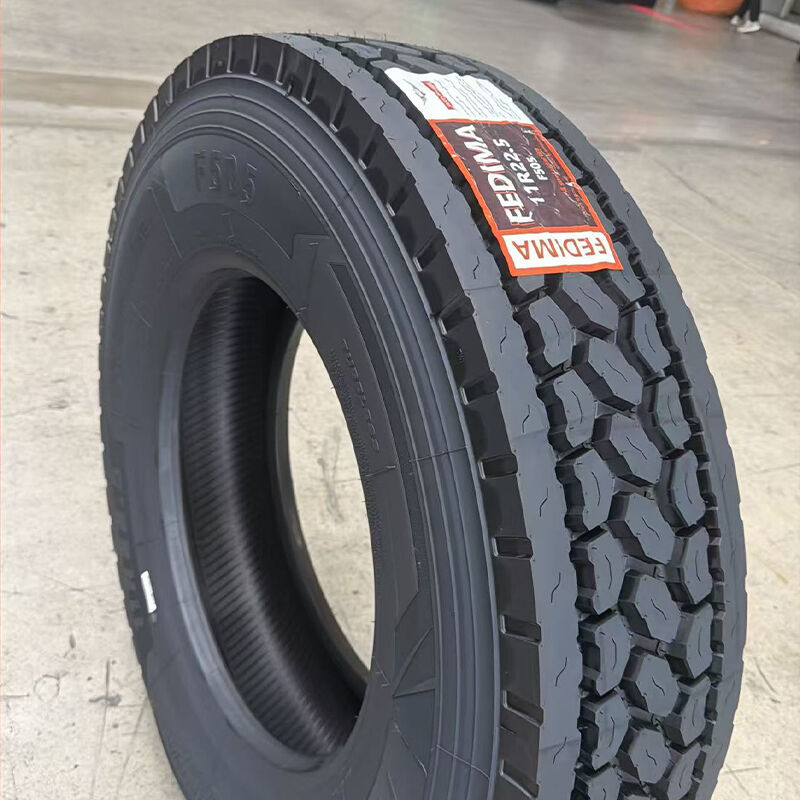
When it comes to commercial truck performance, the design of a tyre's tread is not a minor detail — it is a fundamental engineering decision that shapes how a vehicle grips the road, manages load, and responds under demanding conditions. The Rear pattern on a drive or trailer axle tyre directly determines how effectively power is transferred to the road surface, how well the tyre resists slippage, and how consistently it performs across varying terrain and weather conditions. Understanding the traction benefits of a block-type rear pattern helps fleet operators, logistics managers, and tyre procurement specialists make more informed decisions about the tyres they specify for their vehicles.
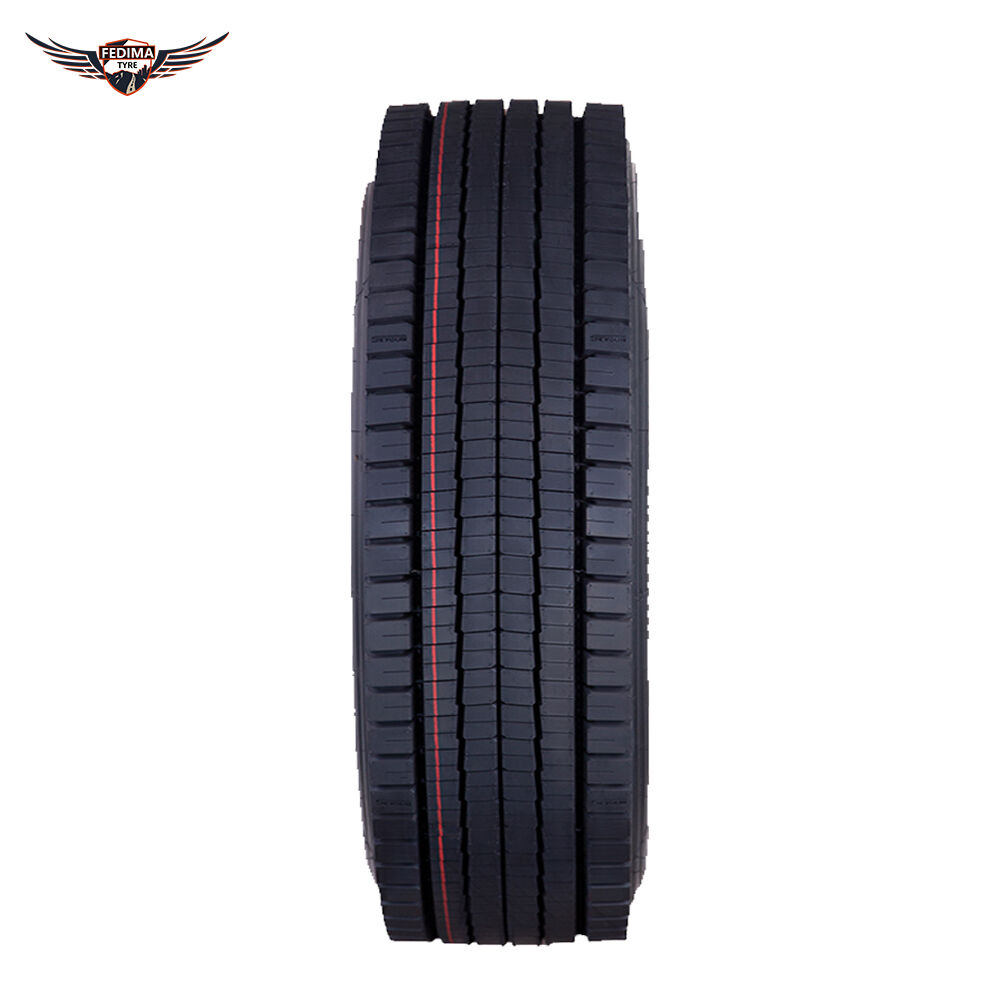
The block-type rear pattern found on the Fedima F203 12R22.5 tyre is engineered specifically for drive and trailer axle applications where traction, stability, and durability are non-negotiable. Unlike rib-style or mixed tread designs, a block-type rear pattern creates multiple independent contact zones across the tyre footprint, each contributing to grip, self-cleaning capability, and load distribution. This article explores in detail what makes the block-type rear pattern a superior traction solution and why its structural logic translates into measurable performance advantages on the road.
The Structural Logic Behind a Block-Type Rear Pattern
How Block Geometry Creates Traction Advantage
A block-type rear pattern is defined by its arrangement of discrete tread blocks separated by lateral and longitudinal grooves. Each block acts as an independent traction unit, biting into the road surface as the tyre rotates under load. This geometry is fundamentally different from a continuous rib design, where the contact patch is a single elongated strip with limited lateral grip capability.
The edges of each block in a rear pattern contribute what engineers call 'edge effect' — the ability of a tread element to grip the road at its boundary rather than relying solely on rubber-to-surface friction across a flat face. On wet roads, loose gravel, or compacted surfaces, this edge effect becomes the primary mechanism by which the tyre maintains forward momentum and resists lateral sliding.
In the context of a drive axle, where engine torque is transmitted directly through the tyre to the road, the block-type rear pattern ensures that this torque is distributed across many small contact zones rather than concentrated in a few. This reduces the risk of localised slippage and improves the consistency of power delivery, particularly during acceleration from a standstill or when climbing gradients.
Groove Architecture and Its Role in Traction
The grooves that separate the blocks in a rear pattern serve a dual purpose. First, they channel water, mud, and debris away from the contact patch, maintaining clean rubber-to-road contact even in adverse conditions. Second, they allow the blocks themselves to flex slightly under load, which increases the effective contact area and improves grip on uneven surfaces.
The lateral grooves in a block-type rear pattern are particularly important for traction in the direction of travel. As the tyre rolls forward, these grooves open and close rhythmically, creating a pumping action that expels water from beneath the tread. This is the mechanism that prevents aquaplaning and maintains steering response in wet conditions — a critical safety benefit for heavy commercial vehicles operating at highway speeds.
The depth and angle of these grooves are calibrated to balance traction performance with tread longevity. A rear pattern with aggressively deep grooves will offer excellent initial traction but may wear faster under high-torque conditions. The F203 design balances these competing demands by using a groove geometry that maintains traction performance across the full usable tread depth.
Traction Performance on Drive Axles
Torque Transmission and Anti-Slip Capability
On a drive axle, the rear pattern must handle the full torque output of the engine during acceleration, hill climbing, and loaded starts. A block-type rear pattern is particularly well suited to this role because its segmented tread structure resists the rotational shear forces that cause tyre spin. When a continuous rib tread encounters high torque, the entire contact patch is subjected to uniform shear stress, and if that stress exceeds the friction limit, the tyre spins as a unit.
With a block-type rear pattern, the tread blocks interlock with road surface irregularities at a micro level. Even on smooth asphalt, the block edges engage with surface texture in a way that increases the effective coefficient of friction. On rougher surfaces — gravel roads, construction site access routes, or wet concrete — this interlocking effect becomes even more pronounced, giving the driver confident traction where a smoother tread would struggle.
For fleet operators running vehicles on mixed routes that include both highway segments and off-highway access roads, the block-type rear pattern offers a practical advantage: it does not require the driver to adjust driving style significantly when transitioning between surface types. The traction reserve built into the block geometry provides a consistent performance baseline across conditions.
Performance in Wet and Slippery Conditions
Wet road traction is one of the most critical performance dimensions for any commercial tyre, and the rear pattern design has a direct influence on how well a tyre performs when road surfaces are compromised by rain, standing water, or light snow. The block-type rear pattern excels in these conditions because its groove network provides multiple drainage pathways that work simultaneously to clear water from the contact patch.
The sipes — fine cuts within the tread blocks — add a further layer of wet traction capability. Each sipe creates additional edges that grip the road surface and absorb a thin film of water through capillary action, improving the rubber-to-road contact even when the surface appears wet. This is why a well-designed rear pattern with sipes consistently outperforms a plain block design in standardised wet braking tests.
For trailer axle applications, where the tyre must manage braking forces rather than drive torque, the rear pattern's wet traction capability is equally important. A trailer tyre that loses grip during emergency braking can cause jackknifing or loss of directional control. The block-type rear pattern provides the braking traction needed to keep the trailer tracking straight and predictably behind the tractor unit.
Traction Benefits for Trailer Axle Applications
Stability Under Braking and Cornering
Trailer axles operate under a different set of forces compared to drive axles. Rather than transmitting engine torque, a trailer tyre must absorb braking forces, resist lateral loads during cornering, and support the static and dynamic weight of the trailer and its cargo. The rear pattern on a trailer tyre must therefore be optimised for stability and controlled deformation under these varied load conditions.
The block-type rear pattern achieves trailer stability through its symmetric or near-symmetric block arrangement, which distributes braking forces evenly across the tread width. When the brakes are applied, each block in the rear pattern contributes to the total braking force, and the lateral grooves prevent the tread from deforming in a way that would reduce contact area. This results in shorter stopping distances and more predictable braking behaviour, particularly when the trailer is fully loaded.
During cornering, the outer blocks of the rear pattern carry a disproportionate share of the lateral load. A block-type design with adequate block stiffness resists the tendency to fold under this load, maintaining a stable contact patch and preventing the tyre from rolling onto its shoulder. This shoulder stability is a key reason why block-type rear patterns are preferred for trailer applications on routes with frequent turns or roundabouts.
Load Distribution and Even Wear
One of the less-discussed traction benefits of a block-type rear pattern is its contribution to even tread wear. When tread wear is uneven — with some blocks wearing faster than others — the traction performance of the tyre degrades unevenly, creating patches of reduced grip across the contact patch. A well-designed rear pattern minimises this risk by ensuring that all blocks carry similar loads and experience similar wear rates.
The F203's block-type rear pattern is designed with this wear balance in mind. The block dimensions and groove widths are calibrated so that the tread wears progressively and evenly from the centre outward, maintaining a consistent traction profile throughout the tyre's service life. This means that a fleet operator can expect the traction benefits of the rear pattern to remain largely intact until the tyre reaches its legal wear limit, rather than degrading significantly in the middle of its service life.
Even wear also has a direct economic benefit: tyres that wear evenly last longer and can be retreaded more reliably, reducing the total cost of ownership for fleet operators. The traction benefits of the rear pattern therefore extend beyond immediate performance to long-term operational efficiency.
Self-Cleaning Capability and All-Season Traction
How Block Patterns Resist Mud and Debris Packing
One of the most practical traction benefits of a block-type rear pattern is its self-cleaning capability. In mixed-use applications where vehicles travel on unpaved roads, construction sites, or agricultural access routes, the tread can accumulate mud, gravel, and organic debris that reduces grip if not expelled efficiently. A block-type rear pattern is inherently better at self-cleaning than a rib or semi-rib design because the open groove structure allows debris to be ejected centrifugally as the tyre rotates.
The spacing between blocks in the rear pattern creates channels wide enough to allow mud to flow through rather than compact. As the tyre rotates, the blocks flex slightly at the point of contact, and this flexing action helps to break up any material that has begun to pack into the grooves. The result is a tyre that maintains its traction performance even after extended operation on contaminated surfaces — a significant advantage for vehicles that regularly transition between paved and unpaved roads.
For logistics operations serving construction, mining, or agricultural customers, this self-cleaning capability of the rear pattern translates directly into reduced downtime and fewer traction-related incidents. Drivers can maintain consistent progress without needing to stop and clear the tyres, and the risk of losing traction when returning to paved roads after an off-highway segment is significantly reduced.
Cold Weather and Light Snow Traction
In regions where winter conditions are a seasonal reality, the rear pattern design plays a critical role in maintaining safe traction on cold, wet, or lightly snow-covered roads. The block-type rear pattern performs well in these conditions because its multiple block edges provide the biting action needed to grip compacted snow, and its groove network channels away the slush and meltwater that accumulates on winter road surfaces.
The sipes within the tread blocks of the rear pattern are particularly effective in cold conditions. At low temperatures, rubber compounds become stiffer, and sipes help to maintain tread flexibility by allowing the blocks to deform slightly under load. This flexibility keeps the rubber in intimate contact with the road surface even when temperatures drop, preserving the traction performance that would otherwise be compromised by compound hardening.
For fleet operators running year-round operations in temperate climates, a block-type rear pattern with appropriate sipe density offers a practical all-season solution that avoids the cost and logistical complexity of seasonal tyre changes. The traction benefits of the rear pattern in cold conditions are not equivalent to a dedicated winter tyre, but they provide a meaningful safety margin over a summer-optimised rib design in the same conditions.
FAQ
What makes a block-type rear pattern better for traction than a rib-type design?
A block-type rear pattern creates multiple independent traction zones across the tread, each contributing edge grip and self-cleaning capability. A rib-type design relies on continuous contact strips that offer less lateral grip and are more prone to aquaplaning in wet conditions. For drive and trailer axle applications where traction under load is critical, the block-type rear pattern consistently outperforms rib designs in wet, loose, and mixed-surface conditions.
Can the block-type rear pattern be used on both drive and trailer axles?
Yes. The F203's rear pattern is specifically engineered for dual-position use on both drive and trailer axles. Its block geometry handles the torque transmission demands of a drive axle while also providing the braking stability and lateral load resistance required on a trailer axle. This versatility simplifies tyre inventory management for fleet operators and ensures consistent traction performance across the entire vehicle.
How does the rear pattern maintain traction as the tyre wears?
The block-type rear pattern is designed to wear evenly across the tread width, which means that the traction performance remains relatively consistent throughout the tyre's service life. As the tread depth reduces, the groove volume decreases, which can slightly reduce wet traction capability, but the block edge geometry continues to provide grip until the tyre reaches its legal wear limit. Regular tyre rotation and correct inflation pressure help to maximise even wear and preserve traction performance.
Is the block-type rear pattern suitable for all-season use?
The block-type rear pattern performs well across a broad range of seasonal conditions, including dry summer roads, wet autumn conditions, and cold winter surfaces with light snow or slush. Its self-cleaning groove architecture and sipe-enhanced block design provide a traction reserve that makes it a practical all-season choice for commercial vehicles operating in temperate climates. For severe winter conditions with heavy snow or ice, a dedicated winter tyre specification would be recommended in addition to or instead of an all-season rear pattern.